Main Menu

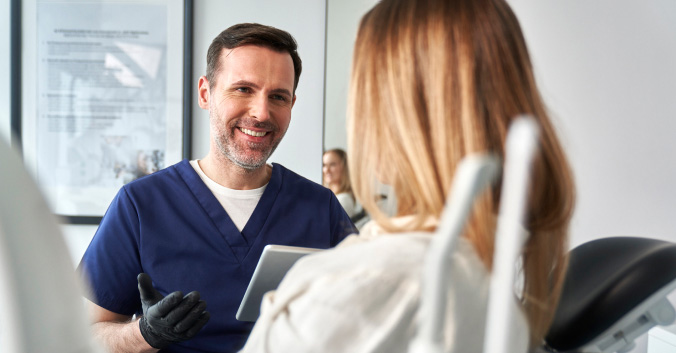
Strong clinical skills are only part of what makes a great dentist. Patients judge how they’re treated emotionally just as much as the quality of the procedure itself, according to research from the University of Iowa.
The researchers found that communication is one of the most important factors of empathy. Patients notice whether their dentist communicates in a way that shows they empathize. Therefore, it might be helpful to think of these skills as showing empathy through empathetic communication.
The study identified three main types of empathy in clinical communication: cognitive empathy, emotional empathy and a hybrid of cognitive and emotional empathy.
Cognitive empathy is primarily concerned with problem-solving and critical thinking. This type of communication builds trust and reduces fear by giving patients a sense of control.
You show cognitive empathy in your practice by:
Emotional empathy is about being able to feel what others feel. Communicating with emotional empathy helps patients feel seen and respected.
You communicate emotional empathy when you’re:
The most effective dentists combine cognitive and emotional empathy into a hybrid empathy. It requires simultaneous patient observation and adaptation of communication.
You use hybrid empathy by:
Patients are sensitive to empathetic communication. They’re more likely to feel satisfied with the quality of their treatment when they feel you’ve listened to them. Satisfied patients are also more likely to return for follow-ups and routine care, listen to your recommendations and view you as a partner in their health.
Being able to empathize with patients doesn’t just help them get consistent, quality health care — it also helps you stay healthy. Several studies have found that dentists who have higher empathy scores and are less likely to experience:
Patients want to understand what’s happening, but they also want to feel understood themselves. Dentists who can combine clear explanations with genuine emotional awareness will stand out not just as skilled clinicians, but as trusted caregivers.