Main Menu

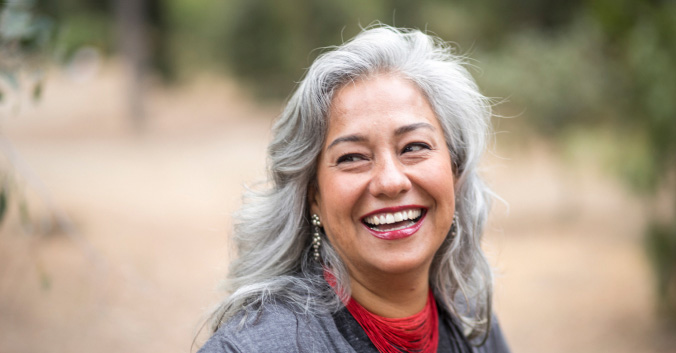
Seniors are facing a growing oral health crisis in the U.S. — one that providers are increasingly on the front line of addressing. Adults over 65 are a large percentage of the U.S. population and are projected to outnumber children within the next decade. Yet many seniors lack access to care due to gaps in Medicare and Medicaid coverage, and their inability to independently purchase stand-alone coverage on the Federal Exchange.
At our 2026 Senior Oral Health Summit, a symposium that brought national leaders together to examine the oral health crisis facing America's seniors, former U.S. Surgeon General Vivek Murthy, M.D. emphasized:
“We have enough [data] to know that oral health matters. We have enough data to tell us when people don't have access to oral health care, either because they don't have access to a provider or because they don't have coverage, that that leads to worse outcomes. We have enough data to tell us that it has implications, like for their life, including their social sort of comfort and their isolation. Point is, there's enough here for us to act.”
For providers, this means caring for more patients with complex, overlapping medical and oral health needs — unfortunately, often without the coordination needed to support them.
Improving outcomes for seniors requires a more connected approach, linking oral health with overall health. Providers are already advancing this shift by:
This is the foundation of dental-medical integration (DMI), which helps enable earlier intervention, better coordination and improved patient outcomes.
Through the Senior Oral Health Partnership Program, launched in 2022 by the Delta Dental Community Care Foundation, we are working alongside providers, community organizations and health systems to expand access and support more coordinated care delivery.
Since its inception with inaugural partners in Washington, D.C., the Senior Oral Health Partnership Program has expanded to Santa Cruz, San Diego and the Mississippi Delta. The providers and staff of our partner organizations drive innovation within this program and are reaching over 25,000 seniors nationwide through locally tailored solutions.
The providers we partner with through our Senior Oral Health Partnership program are already adapting care models to better serve older adults and advocating for this population. Learn more about our work.
Clarke M. Allen, DDS, from Delta Health Center in the Mississippi Delta, recently spoke with Dentistry Today about the importance of practical, patient-centered approaches that:
Read this Dr. Bicuspid article about our partners in D.C. and how community-based models are helping close the gap. Since its founding in 2022, the partnership in D.C. shows how these models can scale:
For additional perspective on how these models are taking shape in practice, listen to this Becker’s Dental + DSO Podcast featuring Rebecca Cornille, DDS, Chief Dental Officer for Vista Community Clinic in San Diego County, and Caitlin Walker, manager for the Delta Dental Community Care Foundation, on how the San Diego partnership is improving care for seniors:
Our Santa Cruz partnership launched Bite Into Life, a public service announcement focused on senior oral health education to address issues upstream before seniors must deal with more serious dental issues. This public awareness campaign is now scaling across our other partner communities to reach more seniors and provide crucial education about oral health and how they can take care of their teeth.
As the population ages, opportunities to deliver more connected, integrated care will only grow. Strengthening coordination between oral and overall health is key to improving outcomes for seniors and supporting providers as they deliver more effective, sustainable care.